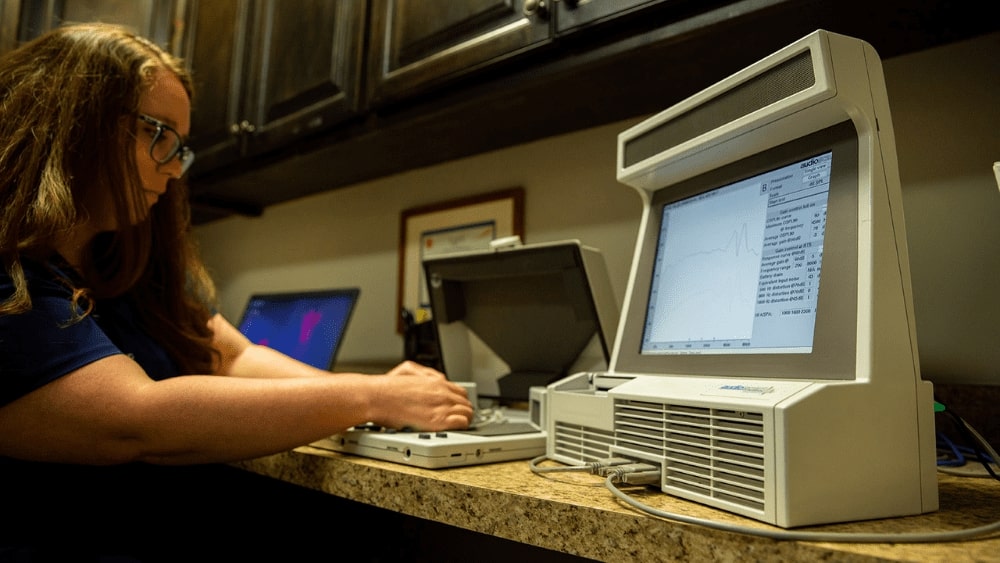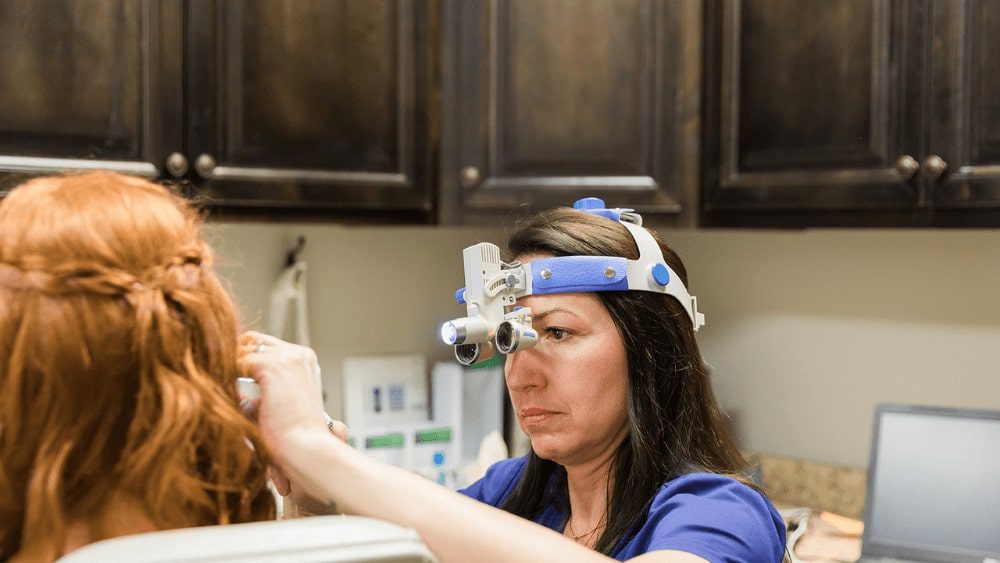
After a hearing test, your audiologist will show you an audiogram — a graph that maps out exactly how well you hear different sounds. For many patients, this is the first time they’ve seen one, and it can be confusing without context. This article explains what an audiogram is, how to read it, what the results mean, and how Alabama Hearing Associates uses audiograms to build personalized treatment plans for patients in Huntsville, Madison, and The Shoals.
If you’ve recently had a hearing test, you were almost certainly shown an audiogram. This small graph carries a significant amount of information about the health of your auditory system — and knowing how to read it puts you in a better position to make informed decisions about your hearing care.
What Is an Audiogram?
An audiogram is a visual chart that records how well you can hear sounds at different pitches (frequencies) and volumes (intensities). It is the standard tool audiologists use to diagnose the type and degree of hearing loss.
The audiogram records results for each ear separately, typically shown as:
- O for the right ear
- X for the left ear
How to Read an Audiogram
The audiogram has two axes:
- Horizontal axis (left to right): Frequency, measured in Hertz (Hz). Moving from left to right goes from low-pitched sounds (like a bass drum) to high-pitched sounds (like a bird or whistle). Typical testing covers 250 Hz to 8,000 Hz.
- Vertical axis (top to bottom): Loudness, measured in decibels (dB). The top of the chart is quiet; the bottom is loud. A mark near the top means you can hear soft sounds at that frequency. A mark lower on the chart means you need that sound to be louder before you can detect it.
The goal is to identify the softest sound you can hear at each frequency — called your “threshold.” These thresholds are then plotted on the graph.
What Do the Results Mean?
Hearing thresholds are classified into ranges:
| Threshold Range | Classification |
| -10 to 25 dB | Normal hearing |
| 26 to 40 dB | Mild hearing loss |
| 41 to 55 dB | Moderate hearing loss |
| 56 to 70 dB | Moderately severe hearing loss |
| 71 to 90 dB | Severe hearing loss |
| 91 dB and above | Profound hearing loss |
A person with normal hearing will have all their thresholds plotted in the top portion of the graph. Someone with hearing loss will show thresholds that dip lower on the chart — especially at higher frequencies, which is the most common pattern.
Common Audiogram Patterns
Sloping High-Frequency Loss
The most common pattern. Thresholds are normal in the low frequencies but drop significantly at higher pitches. This is characteristic of age-related hearing loss (presbycusis) and noise-induced hearing loss. People with this pattern often say speech sounds muffled, or that they can hear someone talking but can’t make out the words.
Flat Loss
Thresholds are reduced evenly across all frequencies. This can result from certain medical conditions, genetic factors, or middle ear problems.
Notch at 4,000 Hz
A sharp dip specifically at 4,000 Hz is a classic sign of noise-induced hearing loss. This pattern is frequently seen in people with a history of loud occupational or recreational noise exposure.
Low-Frequency Loss
Less common, but associated with conditions like Ménière’s disease or sudden hearing loss.
What Else Does a Hearing Evaluation Measure?
Beyond pure-tone thresholds, a comprehensive evaluation at Alabama Hearing Associates may also include:
- Speech discrimination testing — How well you understand words at a comfortable volume, not just detect sounds
- Tympanometry — A test of middle ear function and eardrum mobility
- Bone conduction testing — Helps distinguish between sensorineural and conductive hearing loss, which affects the treatment approach
What Happens After?
Once your audiogram is complete, your audiologist will explain what the results mean for you specifically — taking into account your lifestyle, the sounds you need most, and any symptoms you’ve been experiencing. If hearing aids or other interventions are appropriate, the audiogram serves as the foundation for selecting and programming devices precisely to your hearing profile.
No two audiograms are exactly alike. That’s why personalized care matters.
When Was Your Last Hearing Test?
Adults over 50 should have their hearing evaluated at least every one to two years, even without symptoms. For those with known risk factors — noise exposure history, family history of hearing loss, or conditions like diabetes — more frequent testing is advisable.
At Alabama Hearing Associates, we provide comprehensive hearing evaluations at our Huntsville, Madison, and The Shoals locations. Our audiologists take the time to walk you through your results, answer every question, and help you understand what your audiogram is telling you.
Final Thoughts
An audiogram is more than a graph — it’s a detailed picture of how your auditory system is functioning. Understanding your results empowers you to make confident decisions about your hearing health. Whether your audiogram shows normal hearing or confirms a concern you’ve had for a while, knowledge is the first step toward better hearing.
Schedule your hearing evaluation at Alabama Hearing Associates today. We’ll make sure you leave with a clear picture of where your hearing stands and what, if anything, needs to happen next.