Cost is one of the most common reasons people delay addressing hearing loss — and also one of the most misunderstood topics in hearing care. This article breaks down what hearing aids cost, what determines the price, what insurance typically covers, and how Alabama Hearing Associates helps patients in Huntsville, Madison, and The Shoals find solutions that fit both their hearing needs and their budget.
If you’ve started researching hearing aids, you’ve likely encountered a wide range of prices and found the landscape confusing. The cost of hearing aids varies significantly based on technology level, features, style, and where you purchase them. Understanding what you’re actually paying for — and what options exist — helps you make a decision that serves your hearing health for years to come.
What Is the Average Cost of Hearing Aids?
Hearing aids in the United States typically range from approximately $1,000 to $7,000 per pair, with the average pair of professionally fitted hearing aids falling between $2,000 and $5,000. This price usually includes the devices themselves, professional fitting and programming, follow-up appointments, and a warranty period.
Prescription hearing aids from a licensed audiologist are not simply a product purchase — they include a comprehensive package of professional services that are critical to how well the devices actually work for you.
What Factors Affect the Price?
1. Technology Level
Hearing aids are generally available in entry-level, mid-range, and premium tiers. Higher tiers offer more sophisticated processing power, better performance in difficult listening environments, and more features. The right tier depends on your lifestyle and the specific environments where you need to hear well.
2. Style and Design
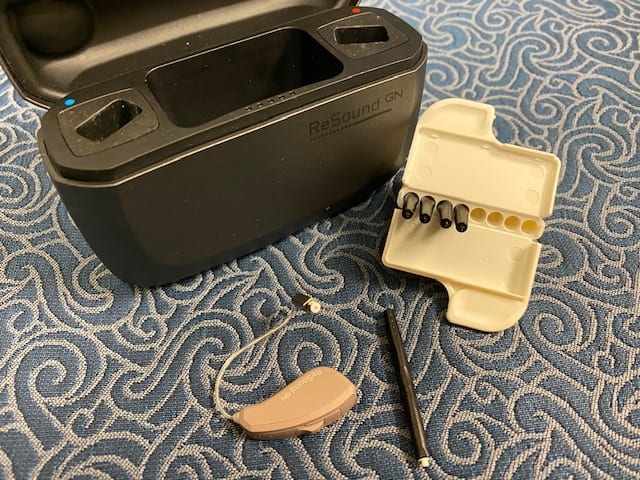
Different styles — behind-the-ear (BTE), receiver-in-canal (RIC), in-the-ear (ITE), and completely-in-canal (CIC) — vary in price. Smaller, more discreet devices often carry a premium due to the precision engineering required.
3. Features
Premium hearing aids may include:
- Rechargeable batteries (no more replacing tiny disposables)
- Bluetooth streaming from phones and televisions
- App-based control and adjustments
- Directional microphone systems for better speech clarity in noise
- Tinnitus masking programs
- Artificial intelligence that learns your listening preferences over time
These features are not just conveniences — for many people, they meaningfully improve hearing performance in the situations that matter most.
4. Professional Services
A hearing aid purchased through a licensed audiologist includes fitting, programming based on your specific audiogram, adjustment appointments, and ongoing support. These services are a significant part of the value and should not be separated from the device cost when comparing options.
What About Over-the-Counter (OTC) Hearing Aids?
Since 2022, over-the-counter hearing aids have been available in the U.S. without a prescription. These devices typically cost $200 to $1,500 per pair and are intended for adults with mild to moderate hearing loss.
OTC hearing aids can be an accessible entry point, but they come with important limitations:
- They are not programmed to your specific audiogram
- They do not include professional fitting or follow-up care
- They may not perform as well in complex listening environments
- They are not appropriate for severe hearing loss or more complex auditory conditions
For many people, OTC devices result in frustration and abandonment. A professionally fitted hearing aid, correctly programmed to your hearing profile, performs significantly better and is more likely to be worn consistently.
Does Insurance Cover Hearing Aids?
Coverage varies widely:
- Medicare (Original) does not cover hearing aids, though Medicare Advantage plans often do.
- Medicaid coverage depends on the state — Alabama has limited adult hearing aid benefits.
- Private insurance plans vary significantly, with some covering all, part, or none of the cost.
- Veterans Affairs (VA) provides hearing aids to eligible veterans at no cost.
- Employer-sponsored plans sometimes include hearing benefits through programs like TruHearing or Amplifon.
Alabama Hearing Associates will verify your benefits before your appointment so there are no surprises. We help you understand exactly what your plan covers and what your out-of-pocket responsibility will be.
Financing and Assistance Programs
If cost is a barrier, options exist:
- CareCredit and similar health financing allow you to spread costs over time, often with interest-free periods.
- Manufacturer financing programs are available through some hearing aid brands.
- State and nonprofit assistance programs can help patients with financial hardship.
Our team can walk you through available options and help identify programs you may qualify for.
What You Should Expect from the Investment
Hearing aids worn consistently have been shown to improve communication, reduce listening fatigue, support cognitive health, and improve quality of life. When professionally fitted and properly maintained, quality hearing aids last five to seven years on average.
Viewed over their lifespan, the cost often works out to roughly $1–$3 per day for devices that meaningfully improve your ability to engage with the world around you.
Final Thoughts
Hearing aid cost is a legitimate consideration — but it should never be the only one. The right hearing aid is one that fits your hearing loss, your lifestyle, and your budget, and that is properly fitted and supported by a qualified audiologist.
At Alabama Hearing Associates, we offer a range of technology options at multiple price points and never push patients toward devices they don’t need. Our goal is to find the right solution for you — and to make sure you understand your options fully before making any decision.
Schedule a consultation at our Huntsville, Madison, or The Shoals location today.